The Complete Guide to Professional Event Badge Design
Whether you are organising a large conference, trade exhibition, corporate summit, or high-value networking event, event badges are one of the most important parts of the attendee experience. Long before a session begins or a conversation starts, the badge creates a first impression.
Well-designed event badges help attendees identify one another quickly, move confidently around the venue, and connect more easily with speakers, sponsors, exhibitors, and event staff. Poorly designed badges do the opposite. They slow interactions, create confusion, and reduce networking opportunities.
At Geovision Services, we have supported events where badge design either improved the attendee experience or quietly worked against it. This guide explains the key principles of professional event badge design, including layout, typography, colour use, badge materials, QR code features, production guidelines, and practical badge ideas for different event types.
Why Event Badge Design Matters
An event badge is not just an identification tool. It directly affects how easily attendees can connect, how smoothly people move through the venue, and how efficiently the event operates. Every design decision, including typography, spacing, colour, size, material, and layout, influences usability.
Strong badge design helps different attendee groups achieve their goals while supporting the overall flow of the event.
Common Event Challenges Smart Badge Design Solves
Helping Attendees Identify the Right People
Badges with bold typography, clear hierarchy, and role-based colour indicators make it easier for attendees to recognise speakers, exhibitors, sponsors, VIPs, volunteers, and staff immediately. This removes guesswork and encourages direct engagement.
Making Conversations Easier
When badges include names, organisations, job titles, interests, and scannable QR codes, introductions become more natural. Attendees find common ground faster, and networking feels easier and more purposeful.
Improving Navigation and Session Access
Badges can also include track indicators, access permissions, or scannable session codes. These visual cues help attendees move more confidently through the venue and reduce dependence on staff for directions.
When all of these elements work together, badges actively support engagement, organisation, and attendee satisfaction instead of simply displaying names.
Core Elements of Professional Event Badge Design
Designing an effective badge requires intention. Every element should support clarity, quick recognition, and a smooth attendee experience.

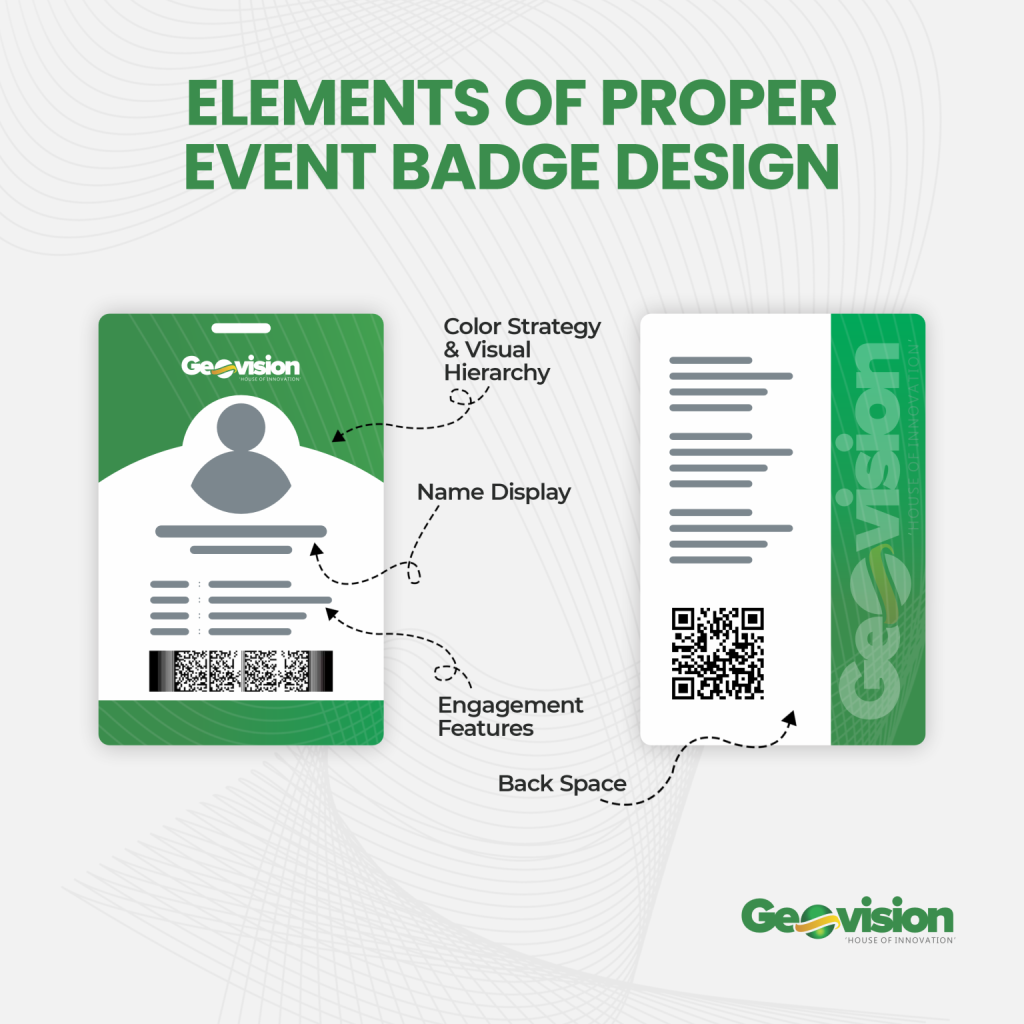
Name Display Guidelines
The most important element on any badge is the attendee’s name. If the name is difficult to read, the badge fails in its main purpose.
Typography affects both visibility and professionalism. Names should be readable from about 6 to 8 feet away, especially in crowded event environments.
Recommended font sizes:
- First Name: 24 to 36 pt
- Last Name: 18 to 24 pt
- Company Name: 16 to 20 pt
- Job Title: 14 to 18 pt
Use clean sans-serif fonts such as Arial, Helvetica, or Inter for maximum legibility. Always test your layout with both short and long names. A badge that works for a short name should also work for a longer name without breaking the layout or reducing readability.
Colour Strategy and Visual Hierarchy
Colour helps turn badges from simple labels into intuitive event tools. A smart colour system allows attendees and staff to identify roles, access levels, or session tracks quickly.
However, too many colours can create confusion rather than clarity.
Best practices for badge colour use:
- Limit the system to 4 or 5 colours
- Use strong contrast for readability
- Keep colours consistent with the event brand
- Combine colour with icons or labels for accessibility
The most important information, such as name, role, and access level, should stand out first. Secondary information should remain visible without competing for attention. This helps attendees process information quickly in fast-paced networking settings.
Using the Back of the Badge Effectively
The back of a badge is often overlooked, but it is valuable space that can improve the attendee experience significantly.
Useful content for the badge back includes:
- Venue maps with key locations marked clearly
- Emergency contacts and help desk details
- Wi-Fi network names and passwords
- QR codes linking to schedules, FAQs, speaker profiles, or sponsor content
For larger events, QR codes can link to digital resources by attendee type rather than by individual person, which keeps badge production more efficient.
Turning QR Codes into Networking Tools
QR codes do not have to be used only for check-in. They can also turn badges into networking tools that support instant digital connection.
A simple workflow:
- Add a registration field for social profile links such as LinkedIn
- Export the registration list
- Insert the social links into the QR code field
- Re-import the updated data into the badge system
With this setup, each attendee’s badge can support both event access and instant digital networking using a smartphone scanner.
Engagement-Driven Badge Features
Badges can also encourage participation when they are designed creatively and intentionally.
Proven Engagement Ideas
- Gamification: hidden codes, stickers, ribbons, or scavenger-hunt mechanics
- Conversation starters: interests, industries, or discussion prompts printed on the badge
- Instant networking: QR codes linked to digital profiles
- Interactive elements: scratch-off areas that reveal prizes, perks, or surprise features
To understand whether these features work well, measure performance through engagement data and post-event feedback.
Choosing the Right Badge Materials
Badge materials affect durability, scannability, and the overall impression of the event. While unusual materials may seem attractive, they can introduce printing delays and technical issues if not planned properly.

Best Materials by Event Type
Corporate and association events
Firm laminate or paper fanfold badges provide a professional look and strong durability for multi-day use. Pre-printed stock with on-demand label printing adds flexibility for last-minute changes.
Trade shows and exhibitions
Durable laminate badges with QR or RFID support work well for fast scanning, lead capture, and exhibitor interaction.
Medical and academic conferences
Badges should clearly display credentials, specialties, and certification levels. Double-sided layouts are often useful for schedules and accreditation details.
Premium and exclusive events
PVC badges provide a more polished, high-end finish that works well for VIP access, sponsor visibility, and controlled entry points.
Professional Event Badge Ideas by Event Type
Your event goals should guide your badge design. Below are examples of practical badge ideas across different event categories.
Corporate Event Badge Ideas

- Executive Summit Badge
- Recognition Event Badge
- Sales Kickoff Badge
- Annual Meeting Badge
- Training Program Badge

Association Event Badge Ideas

- Speaker Badge with “Ask me about…” prompts, session titles, and room details
- Exhibitor Badge
- Chapter Leader Badge

Medical and Academic Event Badge Ideas

- Medical Symposium Badge with specialty, certification level, and CME tracking QR code
- Research Presenter Badge
- Medical Exhibitor Badge
- Clinical Workshop Badge with learning objectives, checklists, and instructor details

Professional Development Badge Ideas

- Certification Track Badge
- Industry Expert Badge
- Mentor Match Badge
- Skills Workshop Badge
A certification badge can also include a QR code linking to study guides, exam schedules, and continuing education resources, helping attendees track their development more easily.
Networking Event Badge Ideas

- Speed Networking Badge with interests, rotation schedule, and conversation prompts
- Industry Mixer Badge
- Roundtable Badge
- Innovation Forum Badge

Special Event Badge Ideas

- Awards Ceremony Badge with honoree details, schedule, and seating guidance
- VIP Experience Badge
- Sponsor Recognition Badge with sponsor tier and access details
- Gala Event Badge

Conference Management Badge Ideas

- Event Staff Badge
- Volunteer Badge
- Security Team Badge
- Tech Support Badge
These badges should clearly display role labels and zone assignments. The back can include shift schedules, emergency contacts, and escalation instructions so staff can respond faster during the event.
Multi-Day Event Badge Ideas

- Conference Track Badge
- Summit Badge with clearance levels, support contacts, and VIP access guidance
- Convention Badge

Event Badge Production Guidelines
Badge production should balance early planning with built-in flexibility for changes.
Key production tips:
- Pre-print badges for small events 1 to 2 weeks in advance
- Use onsite or label printing for walk-ins and last-minute updates
- Print test samples to confirm readability and scan performance
- Test badges under real lighting conditions before final production
Event Badge FAQs
What should an event badge include?
Name, organisation, role, and optional elements such as QR codes, session tracks, or access levels.
What badge size works best?
4 × 6 inches works well for most professional events, while 4 × 3 inches is suitable for smaller gatherings.
How do I make badges look professional?
Use clean fonts, strong visual hierarchy, consistent branding, and durable materials.
When should badges be printed?
As close to the event as possible while still allowing enough time for quality checks.
How can badges support networking?
By including interests, roles, and QR codes that link to digital profiles or useful contact details.
What materials are best?
Firm laminate or paper fanfold works well for most events, while PVC is ideal for premium experiences.
Create Smarter Event Badges with Geovision Services
Event badges shape first impressions, influence networking quality, and support operational flow. When done well, they quietly improve the entire event experience.
At Geovision Services, we support end-to-end event execution, from badge design and printing coordination to onsite check-in systems and event operations. Our approach ensures your badges are not only visually professional, but also functional, scalable, and aligned with your event goals.